👷 Key Responsibilities of a Lifting Equipment Supervisor
The Lifting Equipment Supervisor plays a vital role in ensuring safe, legal, and efficient lifting operations on site. As the direct link between the lift plan and the lift team, the supervisor’s responsibilities go beyond basic oversight — they actively monitor, communicate, and take action to maintain safety.
Here are the most important duties every lifting equipment supervisor must understand and carry out effectively:
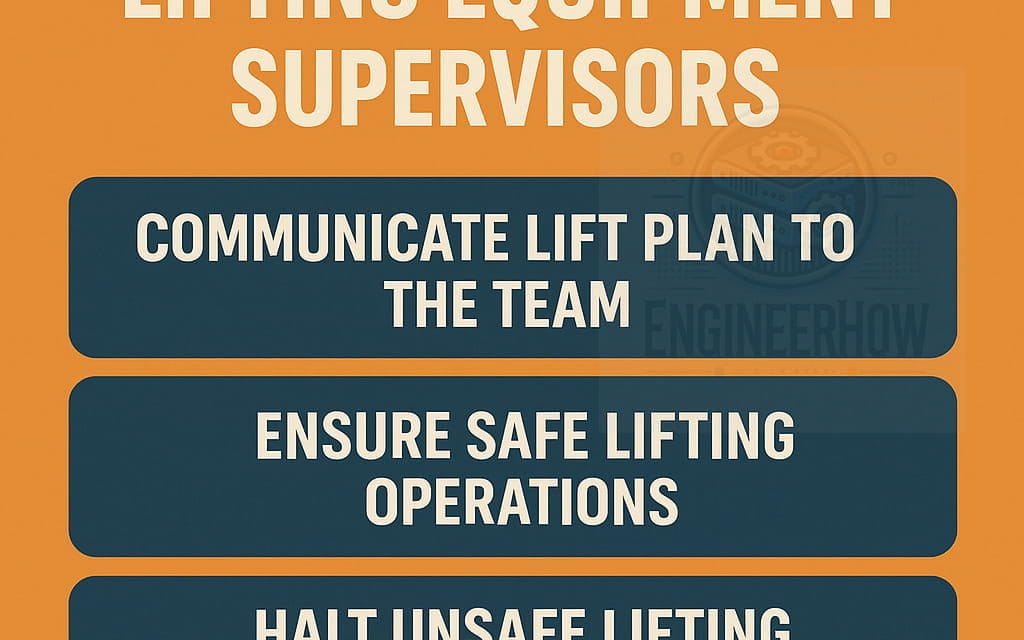
📣 1. Communicate the Lift Plan to the Team
Before any lifting activity begins, the supervisor must:
- Brief all members of the lift team (crane operator, slinger, signaller, riggers)
- Explain the method of operation step-by-step
- Ensure everyone understands their role in the lift
This ensures team coordination and reduces misunderstandings during operations.
🔄 2. Report Changes to the Appointed Person
If there is any deviation from the original plan due to site conditions, equipment changes, or weather, the supervisor must:
- Immediately inform the Appointed Person
- Await revised instructions or a new lift plan
- Never proceed with unauthorised modifications
Communication of changes is key to maintaining control and compliance.
✅ 3. Ensure the Lift Follows the Approved Plan
The supervisor is responsible for making sure the operation is carried out exactly as documented, including:
- Setup of equipment and accessories
- Load path, exclusion zones, and signals
- Timing and sequence of actions
They act as the site’s quality controller for lifting safety.
🛑 4. Stop the Lift if Unsafe Conditions Arise
Safety is non-negotiable. The supervisor must:
- Monitor the entire lifting operation closely
- Cease operations immediately if unsafe practices or hazards appear
- Prevent re-starting until the risk is eliminated or mitigated
This action can prevent accidents, injuries, or equipment damage.
📋 5. Maintain Records and Checklists 🆕
In many cases, the supervisor is also tasked with:
- Signing off pre-lift checklists
- Verifying inspection certificates
- Keeping a log of incidents, weather conditions, and key decisions
Good recordkeeping supports both safety and legal compliance.
🧠 6. Support Toolbox Talks and Safety Briefings 🆕
Supervisors often contribute to daily toolbox talks by:
- Sharing observations from recent lifts
- Reiterating key safety messages from the lift plan
- Addressing concerns raised by team members
This strengthens the site’s safety culture.
✅ Final Thoughts
A lifting equipment supervisor is not just a passive observer — they are a proactive safety leader on the ground. Their ability to communicate, monitor, and respond quickly is essential to safe lifting practices.
💡 Tip: Always empower supervisors to halt operations when needed. It’s not a delay — it’s prevention.
© 2025 EngineerHow.com | All rights reserved
📢 For more lifting operations and site safety content, follow EngineerHow.com and subscribe to our YouTube channel.