
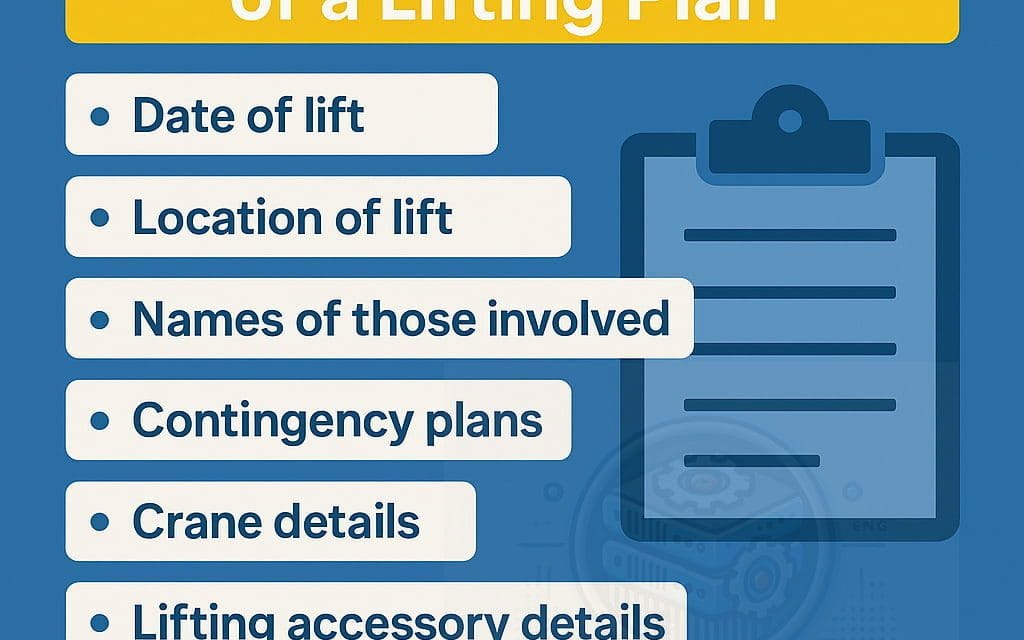
A lifting plan is a critical document that outlines how a lifting operation will be conducted safely and efficiently. For lifting supervisors, understanding what goes into a lifting plan is essential for legal compliance, operational success, and risk mitigation.
Below are the essential elements that should appear in any well-prepared lifting plan:
📅 1. Date of the Lift
Clearly mention the planned date for the lifting operation. This helps with coordination, permits, and planning of other site activities.
📍 2. Location of the Lift
Specify the exact location of the lifting operation on site. Include building zones, coordinates, or grid references if available.
👥 3. Names of Key Personnel
Include names and roles of all personnel involved, such as:
- Appointed Person
- Crane Operator
- Slinger/Signaller
- Lift Supervisor
This ensures accountability and clear communication.
⚠️ 4. Hazard Identification
List any foreseeable hazards related to the lift such as:
- Overhead obstructions
- Power lines
- Weather conditions
- Nearby structures
This leads into the next critical section — risk assessment.
🛡️ 5. Risk Assessment
Provide a documented assessment of risks involved and how they will be controlled. This shows a proactive approach to safety and is often legally required.
📊 6. Load Details
Include information such as:
- Type of load (material, object)
- Weight and dimensions
- Center of gravity (if applicable)
- Load stability or fragility
This allows for accurate crane and gear selection.
🏗️ 7. Crane and Lifting Accessory Details
Mention specifications of lifting equipment to be used:
- Crane make, model, and SWL (Safe Working Load)
- Sling type, shackles, hooks, spreader beams
- Inspection status and certification
🗺️ 8. Lift Plan Diagram
Attach or embed a clear lifting plan diagram showing:
- Crane positioning
- Load travel path
- Exclusion zones
- Nearby hazards
Visual plans help align all parties involved in the lift.
🌍 9. Ground Conditions
State the type of ground and its suitability for supporting lifting equipment:
- Compacted soil, concrete pads, or steel plates
- Slope or levelness of the surface
Poor ground conditions can cause crane instability.
🧾 10. Sequence of Operations
Step-by-step instructions for how the lift will be executed:
- Arrival of equipment
- Setup and rigging
- Lifting and placement process
- Dismantling or demobilization
This helps avoid confusion during the actual operation.
📞 11. General Contact Details
Include emergency contacts, site manager numbers, and technical support in case assistance is needed during the lift.
🔄 12. Contingency Plans
Outline alternative actions in case of:
- Equipment failure
- Weather disruption
- Personnel unavailability
This ensures the team is prepared for unexpected scenarios.
✍️ 13. Declaration and Signature(s)
A signed declaration by the Appointed Person and Lift Supervisor confirms that all steps have been reviewed and understood.
✅ Final Thoughts
A lifting plan is more than a checklist — it is a live document that represents the coordination, safety, and planning standards on your site. Taking the time to include these elements ensures not only compliance but also the protection of people, property, and progress.
💡 Tip: Keep digital templates ready and review them with your team before every lift.
© 2025 EngineerHow.com | All rights reserved
📢 For more lifting tutorials and supervisor guides, visit EngineerHow.com or check out our YouTube channel.


