🏗️ What is Compound Collapse Radius?
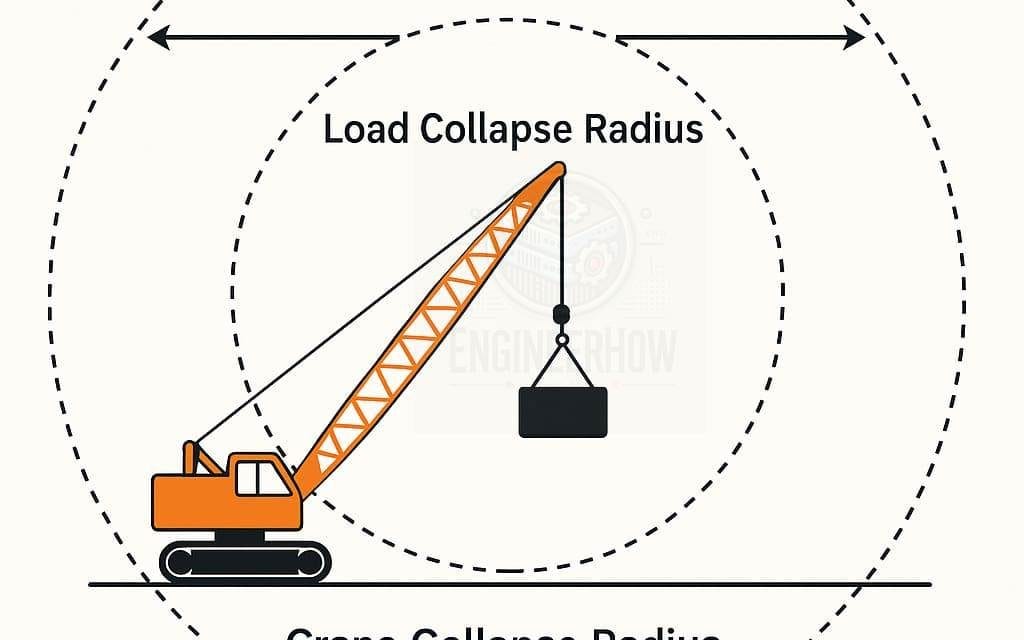
The Compound Collapse Radius defines the total danger zone around a crane in case of failure — combining the potential fall radius of both the crane and the suspended load.
✅ Formula:
Compound Collapse Radius = Crane Collapse Radius + Load Collapse Radius
This value is critical for safe lift planning, especially in urban, congested, or live-work sites.
📏 Visual Reference
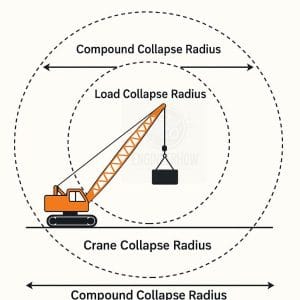
Illustration: Safety zone calculated by adding crane boom length and expected load swing/drop distance.
📊 Real-Life Example Table
| Crane Type | Boom Length (m) | Load Collapse Radius (m) | Compound Radius (m) |
|---|---|---|---|
| Mobile Crane | 30 | 8 | 38 |
| Truck-Mounted Crane | 18 | 6 | 24 |
| Tower Crane | 40 | 10 | 50 |
| Crawler Crane | 25 | 5 | 30 |
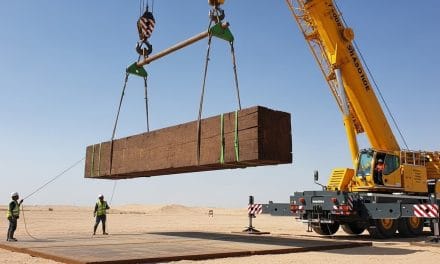
Use these values for barricading zones and emergency planning.
🧠 Why Is It Important?
🛑 Prevents personnel injury and property damage
✅ Required in safe lifting plans
📋 Included in risk assessments by the Appointed Person (AP)
🚧 Guides barricade/zone markings around cranes
🧮 Sample Calculation (Chart Style)
| Element | Value |
|---|---|
| Boom Length | 35 m |
| Expected Load Swing/Drop | 7 m |
| Compound Radius | 42 m |
Pro Tip: Add 10% margin to the result for unpredictable swing or weather conditions.
🔧 Tools & Software for Planning Collapse Radius
| Tool | Type | Usage | Link |
|---|---|---|---|
| draw.io / diagrams.net | Diagram Maker | Easily draw crane layout and radius zones | diagrams.net |
| Crane Planner 2.0 | Lift Planning (Liebherr) | 3D simulation of lifts and radius zones | Liebherr Crane Planner |
| CAD (LibreCAD/AutoCAD) | Engineering Drawing | Accurate top-view layout design | LibreCAD |
| Google Earth Pro | Site Marking | Plot compound radius for actual job site | Google Earth |
👷 Who Should Use This?
| Role | Responsibility |
|---|---|
| Appointed Person (AP) | Calculate and include it in the Lift Plan |
| Crane Operator | Know safe working limits |
| Site Safety Officer | Barricade and communicate danger zones |
| Signalman / Riggers | Maintain safe distance during lifting operations |
🛑 Safety Reminders
Never stand or work within the compound radius during lifting operations
In case of strong wind, soft ground, or complex loads, increase buffer radius
Regularly inspect and verify lift plan validity on-site
📥 Downloads
📣 Final Words
Understanding the Compound Collapse Radius isn’t just theory—it’s real-life protection. Plan wisely, mark it clearly, and keep your site safe.
🔗 Visit EngineerHow.com for more engineering safety guides.
📺 Subscribe to @EngineerHow on YouTube for live demonstrations and tutorials.
💬 Comment your experience or tools you use for crane safety — help others stay safe too!