🏗️ Choker Single Leg Hitch: Calculation Guide for Safe Lifting
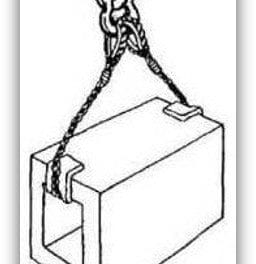
The Choker Single Leg Hitch is a commonly used method in lifting operations for handling pipes, beams, and scaffold jacks. It involves looping the sling around the load and back through one of its ends or a choker hook. While effective, this method reduces the safe lifting capacity due to added tension and pressure on the sling.
🎯 When to Use It?
Lifting cylindrical items like pipes and scaffold jacks
When a secure grip is needed around the object
In scenarios where a standard vertical lift isn’t practical
⚠️ Key Safety Factors
| Factor | Explanation |
|---|---|
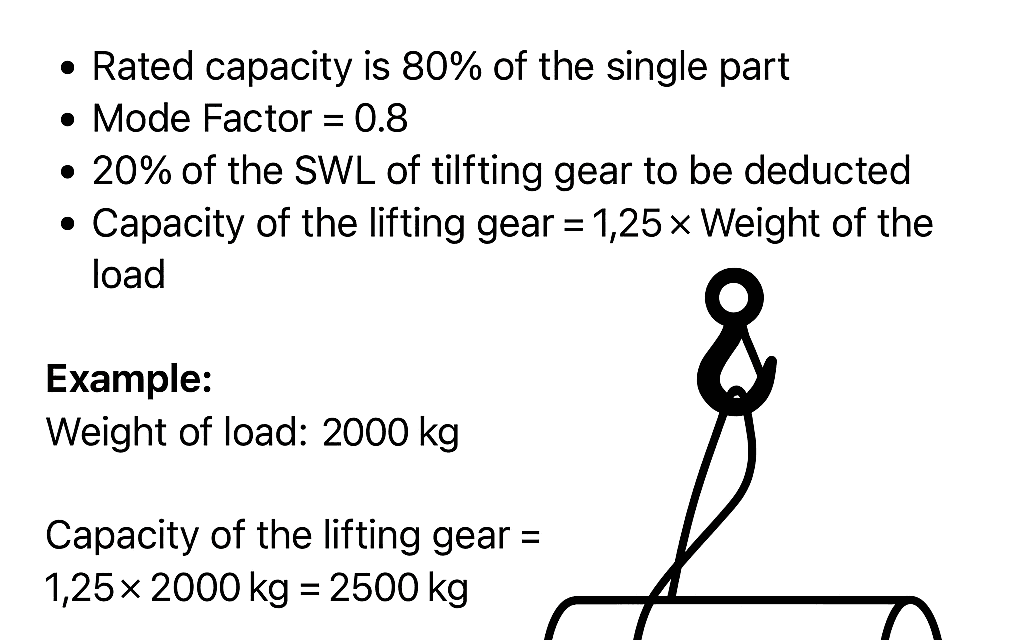
| Mode Factor | 0.8 (reduces effective capacity by 20%) |
| Rated Capacity | 80% of single part vertical lift |
| Gear Safety Margin | Lifting gear must be rated at 1.25x load weight |
| SWL Deduction | 20% of the gear’s SWL must be deducted |
🧮 Example Calculations
▶️ Example 1:
Load Weight: 1000 kg
Required Sling Rating: 1000 / 0.8 = 1250 kg
Lifting Gear Capacity: 1.25 × 1000 = 1250 kg
Usable SWL after 20% Deduction: 1250 × 0.8 = 1000 kg
▶️ Example 2:
Load Weight: 1500 kg
Required Sling Rating: 1500 / 0.8 = 1875 kg
Lifting Gear Capacity: 1.25 × 1500 = 1875 kg
Usable SWL after 20% Deduction: 1875 × 0.8 = 1500 kg
📊 Download Excel Calculator
Speed up your lifting calculations with our free spreadsheet:
📥 Choker Hitch Calculator (Excel)
🖼️ Visual Guide
Here’s a helpful diagram that illustrates how the Choker Hitch works:

✅ Conclusion
The Choker Hitch is a practical method for lifting awkward loads — but safety is critical. Always apply the correct mode factor and safety margins, and double-check your sling and gear capacities.
💬 What Do You Think?
Got questions or tips about lifting safety? Share them in the comments!
If this post helped, please like, comment, and share to help others stay safe and informed.
🔗 Visit EngineerHow.com for more lifting guides and engineering tutorials.